I'm a Ph.D. candidate in applied physics at the University of Michigan, and I study various modeling problems in biophysics and quantitative biology. You can read about some projects here on my site, as well as at GitHub, Google Scholar, and LinkedIn. As a side note, for those who are interested in this topic, I am also a certified teacher of mindfulness meditation, through the UC Berkeley Greater Good Science Center.
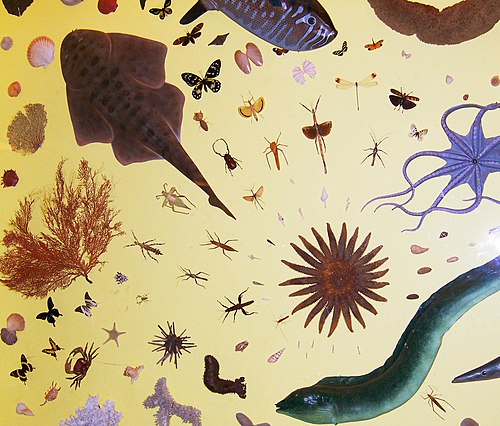
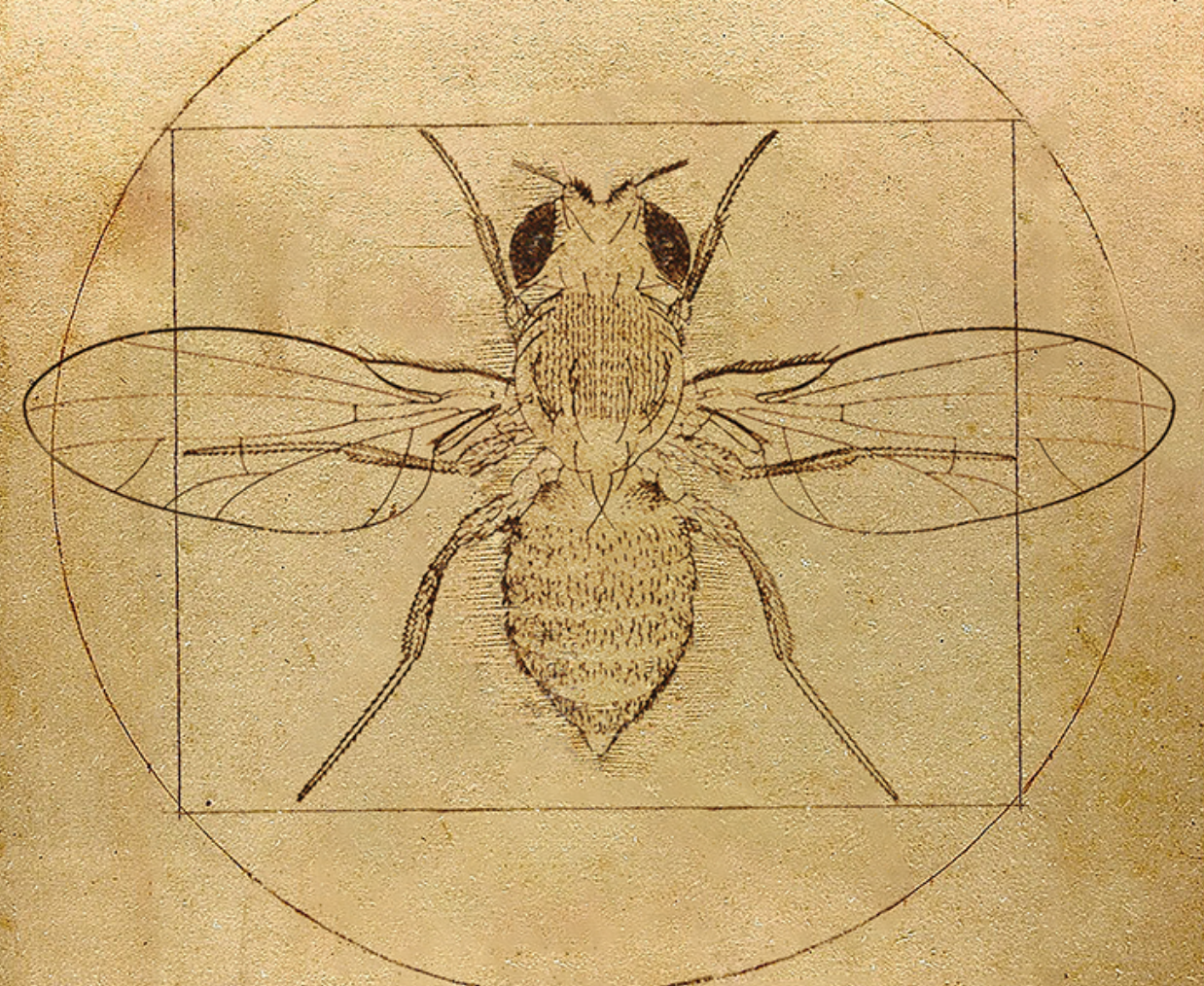
Broadly speaking, I study questions about how unicellular and multicellular organisms control their size and specify their patterning in order maintain proportionality and function. The top image on this page represents the results of a data analysis project, in which I quantified the pattern of cell sizes in the adult Drosophila wing. The image on the right from the Wikipedia entry on symmetry in biology beautifully illustrates the patterning, precision and symmetry in the animal world.
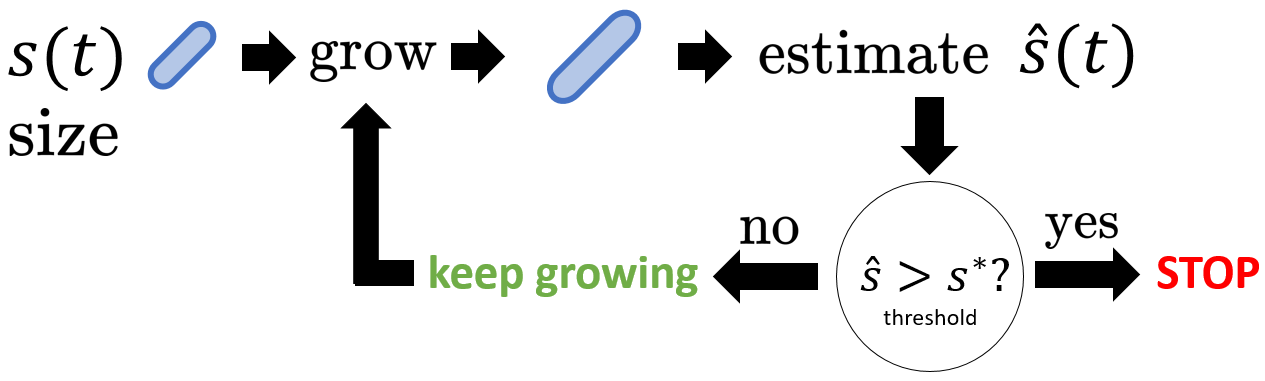
Across many species, within a given cell type, cell division size typically varies at the level of about 10%. In order to understand this level of variability, we introduced a 2D stochastic model which specifies dynamics of cell size and a size estimator. We paired this dynamical description with a threshold division criterion, in which division is triggered at a certain value of the estimator. Our model makes specific predictions about how division size variability is altered by the estimator's refresh rate, and how it depends on fluctuations in the growth rate and fluctuations in the level of the estimator. We also connected this phenomenological description to more mechanistic models of growth and size sensing in the bacterium E. coli, and we make specific predictions about how experimenally tunable parameters will alter the division size variability in this model organism.

Even though development is a noisy process, organisms maintain precise control of size and patterning as they grow, leading to a symmetric, well-proportioned and functional adult. Measurements of the surface area of adult fruit fly wings indicate a left-right area difference of no more than about 1%, while the human femur and humerus each have a left-right length precision of about 0.5-1%. Inspired by these observations, we investigated how precisely an organism could possibly set the size of its organs, and if the observed variation of about 1% approaches such a limit. Image credit: Vea and Shingleton, WIREs Developmental Biology 2020

Some many-body biological systems can be modeled as self-propelled particles at high density. Without self-propulsion, packings of such particles undergo a rigidity transition as the density is increased, but when the particles each generate force internally, different states of matter can emerge. While on a Fulbright Scholarship at TU Delft in the Netherlands, I investigated the phases of such active systems with Timon Idema and Ruben van Drongelen. We studied correlated fluctuations in these high-density, active systems in order to characterize their phase space. You can find a graphical abstract on GitHub and read our publication in Europhysics Letters.

As a finalist in the Climate Hack AI competition, I built and trained models to predict future cloud cover given time series data of past cloud cover. This project is motivated by a demand to predict solar intensity in order to direct energy grid resource allocation. I trained a Wasserstein auto-encoder with a disriminator architechure to learn a low-dimensional representation of satellite images of cloud cover.
As a graduate student instructor (GSI) at the University of Michigan, I've taught a number of courses during my PhD.